.webp?w=375&h=73)

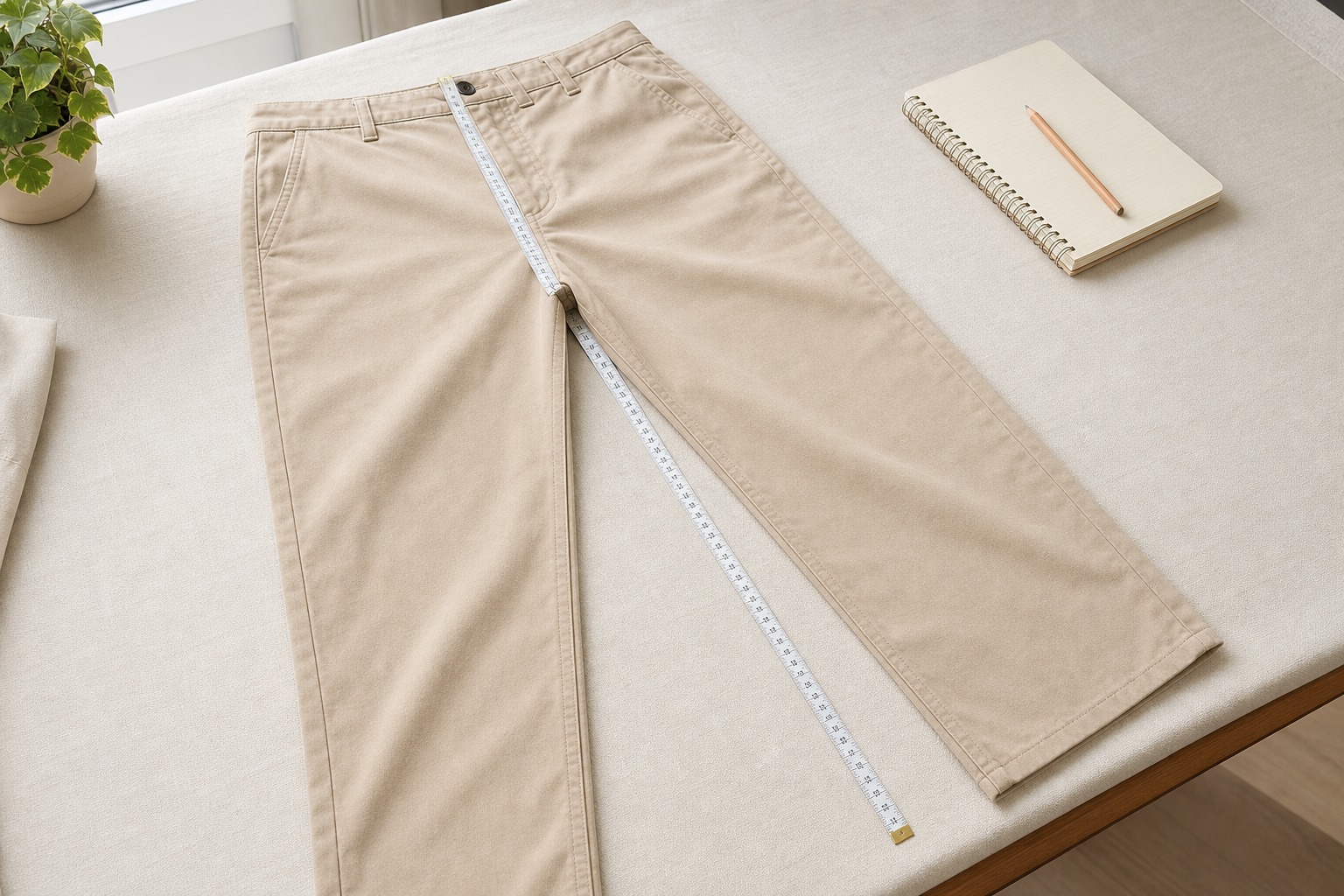
To measure pants rise and inseam accurately, use a pair that already fits you well, lay it flat without stretching it, and follow the seams with a flexible tape. Rise describes the distance from the crotch seam to the top of the waistband. Inseam describes the distance from the crotch seam to the bottom of the leg.
Those two measurements help explain where the waistband may sit and where the hem may fall. They are most useful when compared with the size information on the specific product page, since brands and silhouettes do not all use the same proportions.
What you need
- A flexible measuring tape
- A flat table, floor or other smooth surface
- A pair of non-stretchy or gently relaxed pants that fits as intended
- A note app or paper for recording the result
A second pair with a different fit can also help. For example, compare a favourite relaxed pair with a more fitted pair to see how the measurements change.
How to measure the front rise
- Fasten the pants as you normally would.
- Lay them face up and smooth the waistband without pulling the fabric.
- Find the point where the front and back seams meet at the crotch.
- Place the tape at that intersection.
- Follow the front seam to the top edge of the waistband.
- Record the measurement and label it front rise.
Do not measure in a straight diagonal line across the fabric. Following the seam gives a more repeatable result.
How to measure the back rise
- Turn the same pants over and smooth them flat.
- Start at the crotch seam intersection.
- Follow the centre-back seam to the top of the waistband.
- Record the measurement and label it back rise.
The back rise is commonly longer than the front because it follows the shape of the garment. It can help you compare coverage between pairs, but the measurement alone cannot predict fit without considering fabric, cut and waistband construction.
How to measure the inseam
- Keep the pants flat and align the legs.
- Fold the upper leg slightly aside so the inside seam is visible.
- Place the tape at the crotch seam intersection.
- Follow the inside-leg seam to the bottom edge of the hem.
- Record the result and note whether the garment was cuffed.
If the legs do not align perfectly, measure one at a time. Avoid pulling the tape or stretching knit fabric while you work.
What the measurements can tell you
| Measurement | Helps you compare | Does not prove by itself |
|---|---|---|
| Front rise | Approximate waistband position at the front | How snug the waist will feel |
| Back rise | Relative rear coverage between garments | Whether the cut suits every body shape |
| Inseam | Approximate inside-leg length | Exact hem position with every shoe |
| Outseam | Overall side length when provided | Rise and inseam separately |
Compare like with like
A wide-leg pant and a tapered harem pant can share an inseam yet look different at the ankle because the silhouettes drape differently. A high-rise and mid-rise style can also feel different even when the waist circumference is similar. For a useful comparison, match your reference garment to the kind of fit you are considering.
Footwear matters at the hem. If you plan to wear a pair with flats, sneakers and a higher shoe, think about which combination you will use most. The goal is not a universal length; it is a length that works with your preferred styling.
Common measuring mistakes
- Measuring while wearing the pants: body position and tape angle can change the result.
- Stretching the waistband or leg: record the garment at rest unless the listing specifically asks for a stretched measurement.
- Starting below the crotch intersection: this shortens both rise and inseam readings.
- Using a rigid ruler: it may not follow a curved seam consistently.
- Ignoring the product's own chart: your reference measurement is a comparison tool, not a replacement for the listing.
A simple home measurement record
Save the garment name, size on the label, front rise, back rise, inseam and a short note about how it fits. Over time, this becomes more useful than remembering size labels alone. Record whether the pair sits at the waist, above it or below it, and whether the hem works with your common shoes.
Frequently asked questions
Can I measure my body instead of a pair of pants?
Body measurements are useful when a size chart requests them, but garment rise and inseam are easiest to compare from an existing pair. Follow the method required by the individual chart.
Is inseam the same as total pants length?
No. Inseam follows the inside leg from crotch to hem. Total length or outseam is measured from a point near the waistband down the outside of the leg.
Why do two pants with the same inseam fit differently?
Rise, waistband placement, crotch shape, fabric and silhouette all influence where the hem falls and how the garment drapes.
Use your measurements while browsing
Compare your notes with the details provided for wide-leg pants and harem pants. Confirm the current size chart, fabric information and care instructions on each product page.
Bottom line: use a well-fitting garment, follow the seams and record rise and inseam separately. A consistent reference gives you a better basis for comparing different pant silhouettes.